A new thermal reality for Data Centre infrastructure
The global data centre landscape is undergoing a profound transformation.
The rapid expansion of artificial intelligence (AI), machine learning, and high-performance computing (HPC) is reshaping not only IT systems but also the way energy, heat, and cooling are managed.
As computing power continues to grow, power density rises too. That means higher energy use and greater thermal stress on critical data centre infrastructure.
Traditional air cooling systems that have served data centres for decades are now reaching their physical and economic limits.
To maintain performance and manage environmental impact, the industry is shifting toward a new model: liquid cooling data centre architectures.
These new infrastructure designs improve thermal efficiency, boost energy performance and offer the flexibility needed to support the demands of an AI-driven digital world.
From air to liquid cooling: smarter systems for AI Workloads
Air has its limits. Liquid cooling systems move heat much more efficiently, which is vital when dealing with AI and high-performance computing clusters.
By circulating coolant directly to hot components like processors and GPUs, direct liquid cooling and immersion systems keep temperatures stable, even in dense racks.
The results are clear: better thermal control, lower energy consumption and quieter, more compact environments.
For data centre operators, these solutions open the door to:
- Improved energy efficiency and reduced operating costs,
- Greater rack density and flexibility in space design,
- Reduced environmental impact through heat reuse and water optimisation.
In short, liquid cooling enables the next generation of AI-ready, energy-efficient data centres.
Across the market, both new builds and upgrades are being designed as liquid-ready. These facilities are planned to evolve as technology and computing needs change.
For design teams and operators, this means rethinking systems as a whole. Power, cooling and monitoring must work together as one ecosystem where every decision affects efficiency and reliability.
Integrating liquid cooling options early in the design phase makes it easier to future-proof the facility and avoid costly retrofits later on. Many organisations are already adopting hybrid setups that combine air and liquid cooling, especially in hyperscale and edge environments. This approach allows a smooth transition while ensuring service continuity.
Water cooling efficiency: a new sustainability lever
Liquid cooling also plays a strategic role in improving energy efficiency and reducing the environmental impact of digital infrastructures.
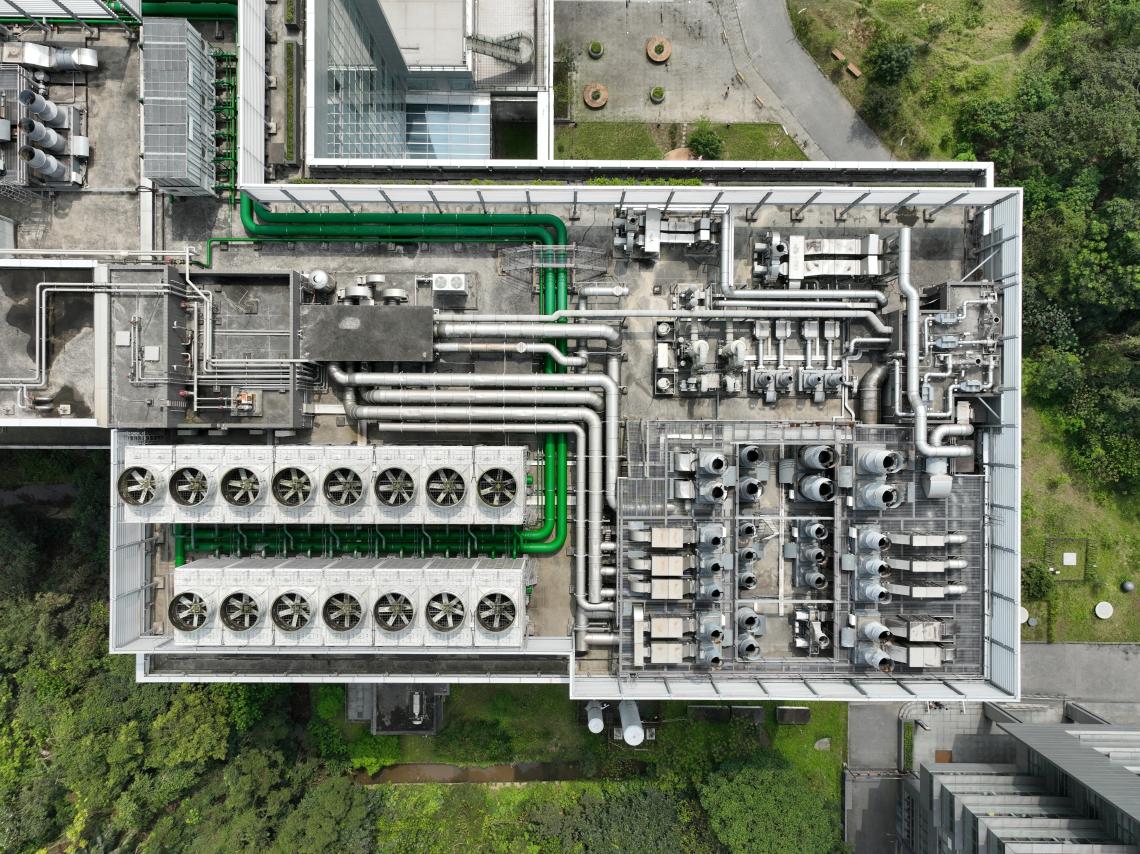
Because it operates with higher outlet temperatures, water-based systems make it possible to recover and reuse waste heat, providing energy for district heating networks or industrial applications. Closed-loop cooling also reduces water use and helps maintain stable operations during periods of extreme heat.
When combined with renewable power and energy storage, liquid cooling becomes a key part of the effort to cut emissions and optimise operating costs. It’s a practical way to align performance with environmental responsibility.
AI and Hyperscale: A market in transition
The adoption of liquid cooling marks a major shift in how data centres are built and managed.
What started as a response to rising power density is now driving innovation, efficiency and sustainability.
As AI workloads grow and hyperscale facilities expand, the need for more powerful and sustainable cooling systems will only increase. Liquid cooling represents a long-term opportunity for operators to enhance resilience, manage energy consumption and prepare for the next wave of digital growth.
Those who design and build liquid-ready infrastructure today will be ready to meet the demands of tomorrow’s high-density environments.
The strategic path forward: Integrated liquid cooling infrastructure
The acceleration of AI and digital workloads is redefining how data centres are built and operated. Air systems alone can no longer deliver the required performance, efficiency and environmental balance. Liquid cooling offers a clear path forward - higher thermal efficiency, better space utilisation and the possibility to recover energy that was once lost.
For facility managers and consultants, success lies in treating cooling, power and sustainability as a single system. Planning for liquid-ready infrastructure today will allow tomorrow’s data centres to achieve the density, resilience and environmental performance that the next decade demands.
Contact us
FAQ : Data Centre Liquid Cooling
What is liquid cooling in data centres?
A data centre that uses liquid cooling systems instead of air to manage heat from IT equipment, improving energy efficiency and thermal stability.
Why are operators moving from air to liquid cooling?
AI and high-performance workloads generate far more heat than air systems can handle efficiently. Liquid cooling reduces energy use, saves space and enables sustainable growth.
Is liquid cooling suitable for existing data centres?
Yes. Many facilities are introducing hybrid systems - such as rear-door or direct-to-chip solutions - to increase capacity and prepare for full liquid adoption later.
How does liquid cooling improve data centre design?
It enables higher power density, lower energy consumption, and reduced environmental impact through more efficient heat transfer and water reuse.
What standards guide liquid cooling design?
Key references include EN 50600 for energy-efficiency and lifecycle metrics, and ASHRAE TC 9.9 for acceptable temperature and humidity ranges.